Showing posts with label Canine. Show all posts

Thursday, September 8, 2022

What is involved in a Canine Annual Wellness Visit?

What is involved in a Canine Annual Wellness Visit?


VCA Hollywood Animal Hospital selects vaccine protocol (frequency) based on breed, age, and lifestyle.

How Vaccinations Work: When administered, they stimulate your dog's immune system to produce disease-fighting calls and proteins-or antibodies-to protect against disease.


Vaccine Information:


DA2P-Pv Vaccine

  • Canine Distemper- Vaccination against this often fatal, hard-to-treat disease is essential
  • Canine Parvovirus- This illness is very contagious, debilitating, and widespread—the disease caused by infected feces.
  • Canine Adenovirus, Type 2-Canine Adenovirus is a relative of the hepatitis virus and is one of the causes of canine kennel cough.
(DA2PP Vaccine 1 or 3-year inoculation) 

Bordetella (Canine Cough) Vaccine - This respiratory-tract infection, similar to the common human cold, is easily transmitted from one dog to another. (Canine Tracheobronchitis Vaccine 1-year inoculation)

Rabies Vaccine- This incurable viral disease affects the central nervous system of almost all mammals, including humans. It is spread by contact with the saliva of infected animals through bites or skin breaks. Vaccination will provide your pet with excellent resistance to Rabies if they become exposed. For this reason, Florida municipalities require that all dogs receive Rabies Vaccinations regularly. (Rabies Vaccine 1 or 3-year inoculation)


Local municipalities mandate the purchase of an annual license tag on the anniversary of the Rabies vaccine. Broward County tags are available for purchase for county residents. 


Canine Influenza (H3N8/H3N2) Vaccine - This flu is highly contagious and easily transmitted via contact, cough, sneeze, and contaminated surfaces. Usually mild in 80% of the cases, some dogs exhibit more severe symptoms, and a small number of dogs have died from complications associated with this disease. *A booster vaccination three weeks following the initial vaccination is necessary. (Canine Influenza Vaccine 1-year inoculation)


Leptospirosis Vaccine - A bacterial disease that attacks the kidneys and liver. This disease is zoonotic, which means it could transmit to humans.*A booster vaccination three weeks following the initial vaccination is necessary. (Leptospirosis Vaccine 1-year inoculation)


Lyme Disease- Ticks transmit the disease to dogs, other animals, and humans. Lyme disease, if left untreated, could have severe consequences on a dog's health. This disease is most common in the northern parts of the United States. *A booster vaccination three weeks following the initial vaccination is necessary.


Annual Physical Examination- The annual exam is more than just a cursory check-up. Most often, during these veterinary exams, a veterinarian can pick up the early warning signs of a severe problem that will affect your pet in the future. Your veterinarian has special training and experience in detecting subtle illnesses in pets.  (Comprehensive Wellness Examination 6 to 12-months) 

Intestinal Parasite (Fecal) Examination - A fecal examination is the microscopic evaluation of feces performed annually to detect tiny gastrointestinal parasites that can cause your pet to become ill. Some parasites can transmit to people. (Fecal Examination Annual Test)

Heartworm Antigen Test- Dogs get Heartworm Disease from mosquitos. This test is a simple screening test to check if your pet has been exposed to Heartworm Disease. (Heartworm Antigen Test to Antech Annual)


Wellness & Prevention Profile Testing-
Dogs are very good at masking illness, and disease may be present even in pets that appear healthy. Wellness testing is a simple and effective way of monitoring your dog's health. If a concern is found, steps can often be taken to manage the problem. For more information on wellness testing, speak with your veterinarian.(Wellness Profile Blood Test to Antech Recommended Annually Varies By Profile)


To schedule an appointment:
By Phone: (954) 920-3556 
By Email: au1000@vca.com 

Thursday, March 31, 2022

Simple steps to protect your pet.

What happened and what you need to know!

Today, news about CIRDC- Canine Infectious Respiratory Disease Complex began populating in the local media alerting dog owners to this highly contagious virus spreading throughout South Florida.

As your partner in pet care, we want to ensure you know the facts about CIRDC and exactly what to do to ensure your pups are protected.

What is CIRDC?
CIRDC is a disease caused by exposure to multiple viruses and bacteria which infect the respiratory tract of dogs and can cause severe upper respiratory infections like pneumonia, sometimes referred to as "kennel cough."

What can you do? You can protect your pet by ensuring they are up-to-date on their routine vaccines, especially

  1. Bordetella vaccine ("Kennel Cough vaccine")
  2. K9 Influenza H3N8/H3N2 vaccine (CIV vaccine)
  3. Also, this is a good time for dog distancing. Avoiding nose-to-nose meet-ups like at dogs parks and pet events will keep your pet safer.

Need your pet's vaccine status?

To check your pup's vaccine status log onto our myVCA App. Don't have the app, download it here!

Download myVCA App

Need to update your pet's vaccines?


Contact us to set up a Vaccine Clinic Appointment. Vaccine clinic appointments apply only to Bordetella and CIV vaccine services and are provided outside of the regular schedule of appointments. Therefore, you and your pet get in and out faster!


Friday, September 20, 2019

Retired K9 Officer Healthcare Fund

Caring for the officers that care for us!! #familymembers

VCA Hollywood Animal Hospital is proud to share our partnership with the Sheriff’s Foundation of Broward County Retired K9 Officers Healthcare Fund (RK9OHF) to raise money for the coverage of veterinary care costs to canine police officers that have worked to protect our S. Florida community. In retirement, canine officers often live out their years in comfort with their handlers, or partners. Yet, after a career of service these officers are prone to advance orthopedic and service related conditions in addition to issues associated with simply being a senior pet. Typically, there is no financial support for these officers after retirement.

It is the belief of the RK9OHF that the cost of healthcare should be supplemented. The Sheriff’s Foundation of Broward County could not agree more.  As a 501(c)(3) nonprofit organization that collects and manages donations to memorial/ healthcare funds, training programs, education programs and other local nonprofit organizations the Retried K9 Officer Healthcare Fund seemed a perfect extension of their mission. 

Under the supervision of the Sheriff’s Foundation of Broward County, the RK9OHF and VCA Hollywood Animal Hospital provide the best in wellness care to these officers and cover a portion of those costs.
With this partnership, retired K9 officers receive preventative care from VCA Hollywood Animal Hospital at a negotiated rate and the RK9OHF cover a portion of those fees. 

Please consider donating to the RK9OHF to support our South Florida K9 Police Officers in their retirement.  Donations can be made directly at VCA Hollywood Animal Hospital
Or by mail at
VCA Hollywood Animal Hospital
c/o Sheriff Foundation of Broward County
Retired K9 Officers Healthcare Fund
2864 Hollywood Blvd
Hollywood, Fl 33020

100% of all donations made to the Retired K9 Officer Healthcare Fund go to the cost of care for these K9 Officers.

For additional information about this fund please phone VCA Hollywood at 954-920-3556, email us at RK9OHF@gmail.com or reach out to the Sheriff Foundation of Broward County at http://sheriffsfoundationofbroward.org/


Retired K9 Officers Healthcare Fund is a 501(c)(3) serving under the supervision of the Sheriff's Foundation of Broward County- 85-8013389700C-0, tax ID# 65-0898338


Wednesday, March 13, 2019

Don't miss, A K9 Cause Fundraising Event for the Retired K9 Officers Healthcare Fund!!!!!!!!

VCA Hollywood is proud to share "A K9 Cause Event", created through the partnership of Sheriff's Foundation of Broward County, American Heritage School and VCA Hollywood Animal Hospital to raise money for the healthcare costs of retired K9 officers in Broward County.

Started almost two years ago, the Retired K9 Officer Healthcare Fund RK9OHF, in partnership with VCA Hollywood Animal Hospital has touched the lives of  the K9 officer that protect our South Florida community.

In retirement, canine officers are no longer financially supported by the department they served. Their handlers, or partners, often voluntarily ‘adopt’ these animals to live out their retirement in comfort. It is the belief of the RK9OHF that the cost of healthcare should be supplemented. In accordance with that belief, a partnership was established with the RK9OHF and VCA Hollywood Animal Hospital to provide the best in wellness care to these officers and to cover a portion of those costs. American Heritage School supports this goal.

American Heritage School is hosting a Silent Auction of original works or art, including drawings, paintings, ceramics and photography Saturday April 6, 2019 in the lovely Black Box Theatre on campus. These special works of art will be available this "A K9 Cause Event" 100% of all funds raised from this event will benefit the Sheriff's Foundation of Broward County's Retired K9 Officer Healthcare Fund.

Inspired by a little boy's passion for animals and art, A K9 Cause is meant to raise money to "fund this fund". 

Where: Black Box Theatre, American Heritage Campus
             12200 W Broward Blvd,
             Plantation, FL 33325

When: 7pm-April 6, 2019

What: Original Artwork Auction
For information about how you can support and attend visit, https://www.retiredk9cause.org/


Who's looking out for our local Retired K9 Officers???

VCA Support Local K9 Law Enforcement Officers both active and in retirement. 

For the next three months, VCA Charities is dedicating their fundraising efforts to local community charities. VCA Hollywood's efforts will be to raise awareness and funds for the Sheriff's Foundation of Broward County's Retired K9 Officers Healthcare Fund. We proudly support this fund and it's commitment to provide healthcare to K9 Officers in retirement. 

In retirement, K9 Police Officers are no longer financially supported by the department they served. Their handlers, or partners, are often the ones who voluntarily adopt these animals to live out their retirement in comfort. 

The Sheriff Foundation of Broward County Retired K9 Officers Heathcare Fund’s mission is to provide the best in wellness care to these canine officers that have worked to protect our S. Florida community by defraying veterinary care costs in their retirement. Every dollar we raise goes to support this wellness care.

Through direct donation and the sale of  VCA WOOF/MEOW hats and other apparel, we will be focusing our fundraising efforts on this worthy charity from March 24th- June 15th .


Simply note the Retired K9 Officer's Healthcare Fund upon donation. 

For more information and for other upcoming Retired K9 Officer's Healthcare Fund events visit:
or call 954.920.3556 ext 105


Tuesday, February 19, 2019

Canine Influenza Virus (CIV) What you need to know about CIV!!!

Canine Influenza Virus (CIV)What you need to know about CIV!!! 

Dog Flu is a highly contagious respiratory disease caused by two different canine influenza viruses. Unless a dog has already had the illness and recovered, almost every dog exposed to the virus will become infected. Two different strains of canine influenza virus (CIV)  have been isolated in the US. CIV, H3N8 was first reported in 2003, and CIV, H3N2 emerged in March 2015.  Dogs have no natural immunity to canine influenza virus. Therefore, dogs at risk should be vaccinated against both strains. 


What is Canine Influenza Virus?
Dog Flu Outbreak Map
Click to see CIV's outbreak path. 
Canine influenza virus is a very contagious respiratory disease that infects dogs. This virus emerged in the US in early 2004 in the form of the viral strains- H3N8. Vaccinations were created for this strain. In 2015 a new strain developed, H3N2. Today, confirmed cases of H3N8 & H3N2 have been found in all but 4 of our United States. This highly contagious disease began as an isolated episode of respiratory disease in one state, and has now become a nationwide health concern for all dogs. In Florida we have seen cases of both strain since 2016.

The current vaccine available protects again both CIV strands. 

What does CIV cause?
CIV causes a respiratory infection in dogs that is also known as “dog flu”. Common symptoms include sneezing, nasal discharge, and frequent coughing that can last for 2 weeks or more. Many dogs have a fever, decreased appetite, and lethargy during the first few days of illness. Some dogs have more serious disease and pneumonia that requires hospital care

How do dogs get CIV infection?
CIV is spread by direct contact with a sick dog and by contact with an environment or people that are contaminated with the virus. Coughing dogs produce invisible virus‐containing mists that travel more than 20 feet in the air, facilitating rapid spread of virus over distances. This type of virus transmission contributes to a rapid increase in coughing dogs in a kennel situation. The virus can survive in the environment (kennel surfaces, food/water bowls, collars/ leashes, toys, beds) or on people’s clothing and hands for 12 to 24 hours before it dies. It is easily killed by hand washing with soap and water, normal laundering of clothing and bedding, and washing food/water bowls and toys with soap and water.
 
What dogs are at risk for CIV?
Most dogs do not have immunity to CIV. This means that dogs of any breed, age or health status will likely be infected if they are exposed to the virus. Dogs at most risk for exposure are those with a social lifestyle and participate in group events or are housed in communal facilities, especially in communities where CIV is circulating. This includes dogs in boarding kennels, day care centers, shelters, dog shows, veterinary clinics, pet stores, grooming parlors, etc. 

What if my dog is diagnosed with CIV?
Dog Flu infection should be suspected in dogs with persistent cough, those with nasal discharge, fever, pneumonia or other clinical signs of more severe respiratory illness.
Most dogs recover at home without any complications. However, because of the increasing prevalence of Dog Flu, the rapid spread of the infection among dogs, and the potential for up to 20% of dogs to have a severe disease course, the most important aspect of care is to keep your dog isolated from all other dogs for 4 weeks. While dogs recover from illness in about 2 weeks, they can remain contagious to other dogs for up to 4 weeks. If you have other dogs or cats in the house, then all of them must be isolated in the home for 4 weeks. Your veterinarian will provide instructions on how to monitor the health of all the pets and when to call about concerns.

The 20% of dogs that progress to a more severe disease course like pneumonia typically have decreased appetite, are very lethargic, and may have labored breathing. These dogs likely need special hospital care for recovery. The mortality rate of canine influenza has been reported to range from 1% to 8% in puppies and older dogs.

What can I do to protect my dog against CIV?
The most important step is to vaccinate your dog against the canine influenza viruses. Just like human flu vaccines, the CIV vaccine may not completely prevent infection but will make it less likely. Additionally, if a vaccinated dog does get infected, the disease is likely to be more mild and of shorter duration. The vaccine can also protect against pneumonia. Talk to your veterinarian about vaccination against CIV and other canine influenza viruses.

Be careful about exposing your dog to events or facilities with other dogs. Knowledge and common sense are your best defenses against canine influenza.


Thursday, June 1, 2017

What you need to know about CIV!!

H3N2 Canine Influenza Virus (CIV) Fact Sheet
What you need to know about CIV!!!

What is Canine Influenza Virus?
Canine influenza virus is a very contagious influenza virus that infects dogs. This virus emerged in the US in early 2004 in the form of the viral strains- H3N8. Vaccinations were created for this strain. In 2015 a new strain developed, H3N2. Confirmed cases were seen throughout the US. Today, confirmed cases of H3N2 have been found in Florida.  It has already infected thousands of dogs in more than 30 states and has been seen in 20+ cases in So. Florida. The current vaccine protects again both CIV strands.  CIV has also infected cats but there is no evidence that it can infect people.
 
What does CIV cause?
H3N2 CIV causes a respiratory infection in dogs that is also known as “dog flu”. Common symptoms include sneezing, nasal discharge, and frequent coughing that can last for 2 weeks or more. Many dogs have a fever, decreased appetite, and lethargy during the first few days of illness. Some dogs have more serious disease and pneumonia that requires hospital care.  CIV can cause respiratory infections in cats too. The cats start sneezing and have nasal discharge but usually do not cough.

How do dogs get CIV infection?
H3N2 CIV is spread by direct contact with a sick dog and by contact with an environment or people that are contaminated with the virus. Coughing dogs produce invisible virus‐containing mists that travel more than 20 feet in the air, facilitating rapid spread of virus over distances. This type of virus transmission contributes to a rapid increase in coughing dogs in a kennel situation. The virus can survive in the environment (kennel surfaces, food/water bowls, collars/ leashes, toys, beds) or on people’s clothing and hands for 12 to 24 hours before it dies. It is easily killed by hand washing with soap and water, normal laundering of clothing and bedding, and washing food/water bowls and toys with soap and water.
 
What dogs are at risk for CIV?
Most dogs do not have immunity to H3N2 CIV. This means that dogs of any breed, age or health status will likely be infected if they are exposed to the virus. Dogs at most risk for exposure are those with a social lifestyle and participate in group events or are housed in communal facilities, especially in communities where H3N2 CIV is circulating. This includes dogs in boarding kennels, day care centers, shelters, dog shows, veterinary clinics, pet stores, grooming parlors, etc. Dogs that mostly stay at home and walk around the neighborhood are at low risk.

What should I do if my dog has canine flu symptoms?
First of all, your dog may have a respiratory infection caused by other respiratory viruses and not H3N2 CIV. This can only be determined by a diagnostic test performed by your veterinarian. Here are the important steps to follow:
Call your veterinarian. Do not go to the clinic without calling first. Your dog may have a very contagious infection that can easily spread to other dogs in the clinic.
Tell the veterinarian the following information:
•Your dog’s symptoms and when they started.
•If your dog has been to a dog show, boarding facility, dog day care center, dog park, grooming parlor, or another event with other dogs within the past week.
• If your dog was around coughing dogs in the past week.
The veterinarian will provide specific instructions on when and how to see your dog.
Talk with your veterinarian about performing a diagnostic test to determine if your dog has the flu virus or another virus. This is very important to the care of your dog. The test is performed on swabs of the nose and throat that are submitted to an outside laboratory.

What if my dog is diagnosed with CIV?
Most dogs recover at home without any complications. The most important aspect of home care is to keep your dog isolated from all other dogs for 4 weeks. While dogs recover from illness in about 2 weeks, they can remain contagious to other dogs for up to 4 weeks. If you have other dogs or cats in the house, then all of them must be isolated in the home for 4 weeks. Your veterinarian will provide instructions on how to monitor the health of all the pets and when to call about concerns.
About 20% of dogs can progress to pneumonia. Dogs with pneumonia typically have decreased appetite, are very lethargic, and may have labored breathing. Call your veterinarian if you see these signs. These dogs likely need special hospital care for recovery. Fortunately, the mortality rate for H3N2 CIV is low.

What can I do to protect my dog against CIV?
You should also remain aware of any information about confirmed documentation of H3N2 CIV in your community or communities where you take your dog. If this virus is present in the community, then be careful about exposing your dog to events or facilities with other dogs. Knowledge and common sense are your best defenses against canine influenza.

The most important step is to vaccinate your dog against the canine influenza viruses. Just like human flu vaccines, the H3N2 CIV vaccine may not completely prevent infection but will make it less likely. Additionally, if a vaccinated dog does get infected, the disease is likely to be more mild and of shorter duration. The vaccine can also protect against pneumonia. Talk to your veterinarian about vaccination against CIV and other canine influenza viruses.
 
Source: University of Florida l College of Veterinary Medicine l 2017

Friday, May 19, 2017

Retired K9 Officer Healthcare Fund!!


VCA Hollywood Animal Hospital is proud to share our inaugural partnership with the Sheriff’s Foundation of Broward County Retired K9 Officers Healthcare Fund (RK9OHF) to raise money for the coverage of veterinary care costs to canine police officers that have worked to protect our S. Florida community.

In retirement, canine officers often live out their years in comfort with their handlers, or partners. Yet, after a career of service these officers are prone to advance orthopedic and service related conditions in addition to issues associated with a senior pet. Typically, there is no financial support for these officers after retirement.

It is the belief of the RK9OHF that the cost of healthcare should be supplemented. The Sheriff’s Foundation of Broward County could not agree more.  As a 501(c)(3) nonprofit organization that collects and manages donations to memorial/ healthcare funds, training programs, education programs and other local nonprofit organizations the Retried K9 Officer Healthcare Fund seemed a perfect extension of their mission. 
 
Under the supervision of the Sheriff’s Foundation of Broward County, the RK9OHF and VCA Hollywood Animal Hospital provide the best in wellness care to these officers and cover a portion of those costs.

With this partnership, retired K9 officers receive preventative care from VCA Hollywood Animal Hospital at a negotiated rate and the RK9OHF cover a portion of those fees. Total cost to the handler/partner is 35% of the initial bill. 

Please consider donating to the RK9OHC to support our South Florida K9 Police Officers in their retirement.  

Donations can be made directly at VCA Hollywood Animal Hospital
Or by mail at
VCA Hollywood Animal Hospital
c/o Sheriff Foundation of Broward County
Retired K9 Officers Healthcare Fund
2864 Hollywood Blvd
Hollywood, Fl 33020

100% of all donations made to the Retired K9 Officer Healthcare Fund go to the cost of care for these K9 Officers.

For additional information about this fund please phone VCA Hollywood at 954-920-3556, email us at RK9OHF@gmail.com or reach out to the Sheriff Foundation of Broward County at http://sheriffsfoundationofbroward.org/


Retired K9 Officers Healthcare Fund is a 501(c)(3) serving under the supervision of the Sheriff's Foundation of Broward County- 85-8013389700C-0, tax ID# 65-0898338


Friday, March 17, 2017

K9 Officer First Aid Training!!!!!!!!

After nearly 70 years of caring for the pets in South Florida, VCA Hollywood has developed strong relationships with our community. These relationships have transcended the doctor:patient bond and established us a solid resource for best pet care. This bond is no more epitomized than with our law enforcement community. For decades we have cared for our state and local police K9 officers for wellness and emergency care. This week, we offered these same officers an opportunity to take care into their own hands with our annual K9 Officer First Aid Training.


Thirty officers from area K9 Units joined us to bone up on their canine care with Leah S, LVT. Leah has offered this training at least once a year to our officers and teaches them to adapt their knowledge of human emergency care to pet care. These Officers learn and practice taking vitals, doing CPR and emergency wound management.

The men where all ears to understand the best practices for caring for their K9 partners.

This year, through a grant for the Broward Sheriff's Office (BSO) special, customized emergency kits were purchased for each officer ensuring they will have everything they need if their partner is injured in the line of duty.

We are grateful for the service these officers perform and proud to be a part of their continued safety.


Tuesday, November 4, 2014

Belly rubs!!!!


 It’s called the sweet spot. That perfect place on your dog’s belly or sides that, when scratched, causes your pet’s foot to go into crazy automatic kicking mode. Every dog owner knows where to find this magical region on his or her canine, as it usually offers up unmitigated joy.
As delightful as this puppy kicking is to watch, this reaction is actually a means of self-protection for your pet. It’s called the scratch reflex, and it’s an involuntary response that exists to keep your dog safe from dangerous bugs or irritants.

Underneath certain portions of your dog’s skin, there are collections of neural pathways that are connected to the spinal cord. When these nerves are activated – either by a scratch or a tickle – they quickly send messages to the spinal cord, which then instructs the dog’s leg to kick. For some dogs, the kicking can be more pronounced depending on how much scratching they feel.

“Dogs that have allergies in particular, it tends to be really easy to illicit that scratch reflex, because the dogs are borderline itchy anyway,” says Lore Haug, a veterinarian and animal behavior expert for Texas Veterinary Behavior Services. “But when you rub their skin more, it accentuates the scratching.”

According to Haug, the scratch reflex came about as a way for animals to protect themselves against irritants on their bodies, especially invading bugs that could carry diseases. For example, if a dog has fleas running around on its skin, the insects’ itchiness will cause the scratch reflex to activate. Then, perhaps the kicking will knock some of the fleas off, alleviating the source of the itch.

It’s similar to the reflexes seen in humans, which usually exist to protect us in some way. “Let’s say you touch a hot stove, and before your brain recognizes it’s painful, the spinal cord recognizes the pain, and you involuntarily jerk your hand back,” Haug says. “If you had to wait until your conscious brain recognized something was in danger, your delay in reaction time could cause an injury or even death in some cases.”

The scratch reflex can be useful for your veterinarian to determine if your pet is suffering from any nerve damage, kind of like when your doctor tests your knee reflexes during checkups. Also, since the reflex is more for swatting away pesky bugs, it doesn’t necessarily mean your dog likes being scratched in that particular area. But of course, some dogs do enjoy a good rub on the belly. You’ll just have to pick up on cues from your pet to figure that out.


Source:
http://www.msn.com/en-us/lifestyle/family-life/why-does-my-dog-kick-when-i-scratch-his-belly/ar-BBbxrHJ

Tuesday, July 29, 2014

Mark your calendars for Two Dogs and Cat walk into a bar... August 9, 2014!!!!

Mark your calendars for Two Dogs and Cat walk into a bar... August 9, 2014!!!! 


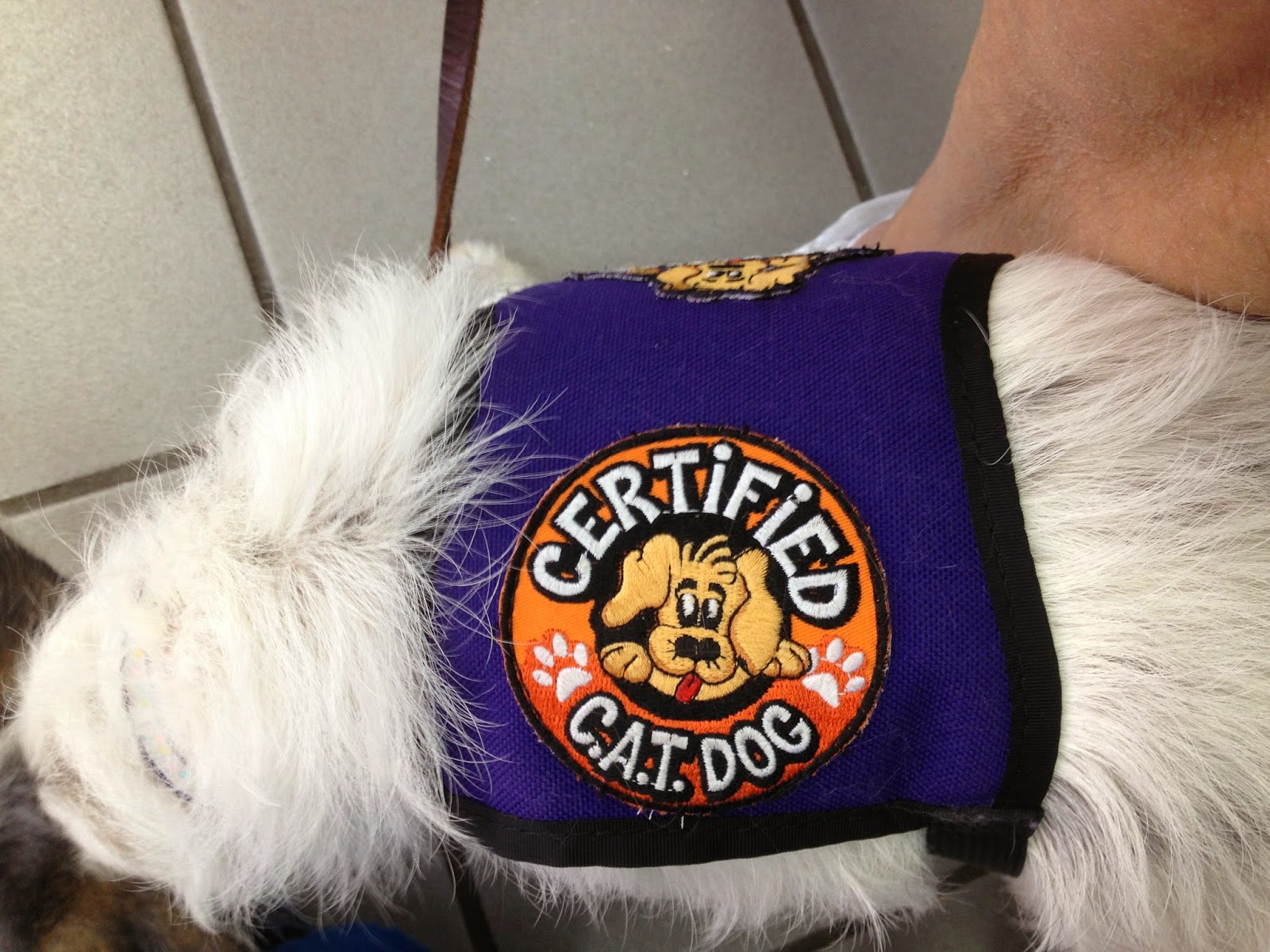
Benefiting: Canine Assisted Therapy, Inc.

Jokers Wild Comedy Club and Bar
10800 W. Sample Rd.
Coral Springs, FL, US
954-990-5175
2dogsncat@catdogs.org 
Overview
 
Angel "Chi Chi" Salazar Comedy Night Show The man most known as Chi Chi from "Scarface" describes his stand-up act as only he could. A hurricane of hilarity, the pop culture icon has been performing stand-up since the early 1980s with a one of a kind show. Combining stand-up, improv, props, and costumes, Angel turns a headlining act into a energetic live action event. Much like the catchphrase he has been using since his beginning in the business, a comedy fan must "sheck it out!" Join them for this fun evening.
 
Saturday August 9, 
8:00 pm 10:00 pm
Jokers Wild Comedy Club and Bar 
Coral Springs Country Club 
10800 W. Sample Rd.
Coral Springs, 33065 
Tickets $25.00 pp (Two items minimum) 

For more information, please call 954-990-5175 or email 2dogsncat@catdogs.org.
 

Thursday, October 24, 2013

Canine Bloat


Gastric Dilation Volvulus (AKA:Bloat, gastric torsion, GDV). Large, deep-chested dogs are predisposed to this condition where the stomach rotates around itself. Risk factors associated with this condition include stress, once a day feeding, dogs that eat too fast and/or exercise after eating.

The signs of bloat include abdominal distention, abdominal pain, salivation, retching and/or vomiting. If your dog shows these clinical signs, immediate veterinary intervention is necessary and surgery to return the stomach to a normal position.


Dr. Leo Londono D.V.M.- HAH
University of Florida