

Showing posts with label 24 hour. Show all posts
Showing posts with label 24 hour. Show all posts
Tuesday, August 8, 2023

Tuesday, January 26, 2021
Our Team is Growing!!!
 |
Keri Schaefer |
Hospital Manager!
As we gladly say goodbye to a challenging 2020, and optimistically embrace the New Year, we proudly welcome Keri Schaefer to our practice as Hospital Manager. As a long-standing member of our Hollywood Animal Hospital family, Keri embodies our familiar roots. Having filled the role of our Human Resource Manager for the last 15 years, Keri developed a deep understanding of not only our practice but of the tremendous people that care for your pets
As she steps into this new role, she continues our tradition of caring for our South Florida pet community. We are excited to welcome Keri as she joins, our medical director, Dr. James Herrington at the helm and we look forward to the continued growth of the practice and of the excellent pet care you have come to expect for your fur babies.

Thursday, November 14, 2019
Free Pet Photo with Santa!
VCA Animal Hospital have a solid reputation for offering the very best in veterinary medicine as well as the latest technological advances and therapies. We believe that giving back to the people that supports us is paramount.
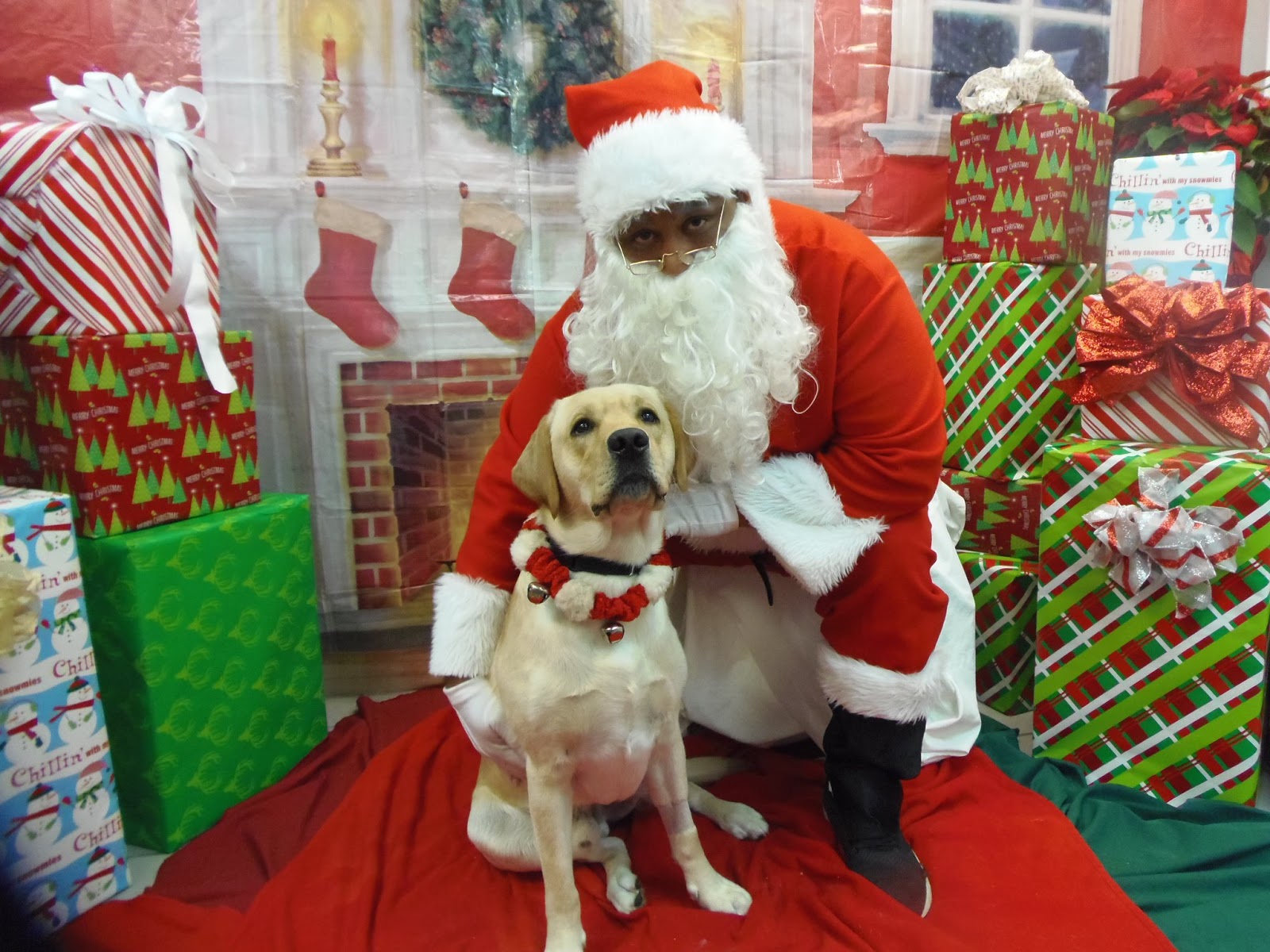 As part of our effort to give back, please join us for our FREE Pet Photo with Santa Event.
Now in its eighth year, St. Nick's pre-holiday route has VCA Hollywood as a permanent stop.
Maybe it is all of the cuddly faces!!
When: Saturday, December 14, 2019
9:00 a.m. - 12:00 p.m.
Where: VCA Hollywood -Annex
2864 Hollywood Blvd
Hollywood,33021
What: Bring your darling dog and your cherished cat to for a FREE pet photo with Santa!A photographer will be on hand to take photos and print them out while you wait.
December 14th is also the final day of our Pet Food Drive! You are invited to bring a donation of cat or dog food to be delivered to home-bound seniors in Broward County through the Meals on Wheels of So. Florida's Companion Pet Program. Meals on Wheels of So. Florida's Companion Pet Program was founded when volunteers began to notice clients sharing their meals with their pets. Senior on a restricted budget can have a difficult time meeting their own needs and often the needs of their companion animals can be neglected. With only the support of volunteers and donation this organization provides delivery of food for these loyal pets once a month to clients of Meals on Wheels. For more information visit: https://www.mowsoflo.org/meals-for-companion-pets
Join us in giving back to our community during this FREE holiday event!
Wednesday, March 13, 2019
Who's looking out for our local Retired K9 Officers???

For the next three months, VCA Charities is dedicating their fundraising efforts to local community charities. VCA Hollywood's efforts will be to raise awareness and funds for the Sheriff's Foundation of Broward County's Retired K9 Officers Healthcare Fund. We proudly support this fund and it's commitment to provide healthcare to K9 Officers in retirement.
In retirement, K9 Police Officers are no longer financially supported by the department they served. Their handlers, or partners, are often the ones who voluntarily adopt these animals to live out their retirement in comfort.
The Sheriff Foundation of Broward County Retired K9 Officers
Heathcare Fund’s mission is to provide the best in wellness care to these canine
officers that have worked to protect our S. Florida community by defraying
veterinary care costs in their retirement. Every dollar we raise goes to
support this wellness care.
Through direct donation and the sale of VCA WOOF/MEOW hats and other apparel, we will be focusing our fundraising
efforts on this worthy charity from March 24th- June 15th .
Donations can also be made at https://vcahospitals.com/in-the-community/vca-charities


Simply note the Retired K9 Officer's Healthcare Fund upon donation.
For more information and for other upcoming Retired K9 Officer's Healthcare Fund events visit:
or call 954.920.3556 ext 105
Tuesday, January 8, 2019
Human Quality Diagnostic Imaging for Pets
As a leader in specialized veterinary medicine, VCA Hollywood has always offered the best care for our pet community. 3D Video of Canine Scan
Now offering the only 64 Slice CT (computed tomography) Scanner in So.Florida Veterinary medicine, we provide human-quality advanced diagnostic imaging for your pet. This means we deliver the highest resolution images available with significantly less anesthetic time, quicker return of interpretations and ultimately more timely diagnoses and treatment for your precious pet.
Your veterinarian may recommend a CT scan for conditions including pre-operation evaluations, neurological disorders (disk disease, seizures, etc), orthopedic disorders, nasal disease as well as many other conditions which may benefit from CT imaging.
Your primary care veterinarian will tell you if a CT scan is right for your pet.

Quick-Facts about CT Imaging
Our
human-hospital grade technology is now available for your patients too.
Read
more to learn about our Haemonetics Cell Saver 5+ and Toshiba 16 slice CT
What is new at VCA Hollywood?
VCA Hollywood Animal Hospital strives to
provide the latest technology in veterinary care with our new 64 Slice CT machine.
 What is a CT Scan?
CT stands for Computed
Tomography. It is basically a series of very fine X‑rays
that the computer then assembles into a 3D image. CT scans are especially
helpful in evaluating the skull, brain, sinuses, inner ear, eye sockets, spine
and discs, bones, joints, and soft tissues.
How does this make us different?
● Quality-VCA
Hollywood HD CT Scans offer greater resolution than traditional diagnostic
imaging tools because of our 64 slice scanner.
● Value-VCA
Hollywood’s CT scans an affordable diagnostic- gets more comprehensive answers
more quickly then other diagnostics
● Availability-CT
Reports are read by a board-certified radiologist and standardly provided
within 24 hours of scan. “Stat” reads are also available.
Toshiba 16 Slice CT
Our 64 slice CT machine produces high resolution images, requires less anesthesia time and generates quicker reports and results, allowing for more timely diagnoses and treatment plans.
 CT include:
* Intravenous Catheter-The catheter gives access to a vein so that the doctor is able to administer drugs and fluids.
* Intravenous Fluids (During Procedure)- The fluid is a balanced electrolyte solution helps to combat anesthesia-induced drop in blood pressure. The exact rate of fluid administration is determined based on the pet’s body weight, hydration status, etc.
* Anti-nausea Medication (Cerenia)-Dogs and cats may have a propensity to vomit due to some of the pain prevention medications and anesthesia they receive. Cerenia is highly effective in controlling nausea allowing your pet to feel more comfortable. Pets treated with Cernia before surgery are shown to have a better appetite during the recovery process.
 * A pre-anesthetic
tranquilizer/analgesic (pain medication)-Administered to decrease stress,
anxiety and preemptively address discomfort Scans are reviewed by our Board Certified Radiologist with standard results returned within 24 hours.
Stat reads available at additional fee.
* A pre-anesthetic
tranquilizer/analgesic (pain medication)-Administered to decrease stress,
anxiety and preemptively address discomfort Scans are reviewed by our Board Certified Radiologist with standard results returned within 24 hours.
Stat reads available at additional fee.
Wednesday, November 28, 2018
Pet Food Drive and Pet Photo with Santa!
Pet Food Drive & Pet Photo with Santa!
 Tis the Season for Giving! VCA Hollywood Animal Hospital
is accepting donations of canned, dry or dehydrated food for cats or dogs to
stock Meals on Wheels of So. Florida’s Companion Pet Program’s Panty to provide
monthly food for pets of homebound seniors in So. Florida.
Tis the Season for Giving! VCA Hollywood Animal Hospital
is accepting donations of canned, dry or dehydrated food for cats or dogs to
stock Meals on Wheels of So. Florida’s Companion Pet Program’s Panty to provide
monthly food for pets of homebound seniors in So. Florida.
Join our efforts and donate what you can.
Final day of the Pet Food Drive is Dec 15th at
our Free Pet Photos with Santa Event.
WHERE is all of
this happening?
VCA Hollywood Animal Hospital
2864 Hollywood Boulevard, one block east of I-95
Hollywood, Florida 33020
954.920.3556
More details:
Donations for food can be made, November 10th- December
15th, 2018 by stopping by with a donation of canned, dry or dehydrated food for
cats or dogs.
VCA Animal
Hospital have a solid reputation for offering the very best in
veterinary medicine as well as the latest technological advances and therapies.
We believe that giving back to the people that supports us is paramount.
ADDITIONAL INFORMATION:
 Meals on Wheels of
So. Florida Companion Pet Program started when volunteers began to
notice clients sharing their meals with their pets. Senior on a restricted
budget can have a difficult time meeting their own needs and often the needs of
their companion animals can be neglected. With only the support of volunteers
and donation this organization provides delivery of food for these loyal pets
once a month to clients of BMOW. For more information visit www.bmow.org.
Meals on Wheels of
So. Florida Companion Pet Program started when volunteers began to
notice clients sharing their meals with their pets. Senior on a restricted
budget can have a difficult time meeting their own needs and often the needs of
their companion animals can be neglected. With only the support of volunteers
and donation this organization provides delivery of food for these loyal pets
once a month to clients of BMOW. For more information visit www.bmow.org.Get tickets!
Now in its seventh year, St. Nick's pre-holiday route has
VCA HAH as a permanent stop. Maybe it is all of the cuddly faces!!
Please join us with your darling dog and your cherished cat for a FREE photo with Santa!
WHEN: Saturday, December 15, 2018
9:00 a.m. - 12:00 p.m.
Please join us with your darling dog and your cherished cat for a FREE photo with Santa!
WHEN: Saturday, December 15, 2018
9:00 a.m. - 12:00 p.m.
A photographer will be on hand to take the photos and
print them out while you wait.
Meals on Wheels of of So. Florida Pet Food Drive!!!!
Meals on Wheels of of So. Florida Pet Food Drive VCA Animal Hospital November 10th through December 15th

When:
November 10th- December 15th, 2018
How:
How:
Just stop by with a donation of canned, dry or dehydrated food for cats or dogs.
Where:
Where:
ADDITIONAL INFORMATION:
VCA Animal Hospital have a solid reputation for offering the very best in veterinary medicine as well as the latest technological advances and therapies. We believe that giving back to the people that supports us is paramount.
 Meals on Wheels of So. Florida Companion Pet Program started when volunteers began to notice clients sharing their meals with their pets. Senior on a restricted budget can have a difficult time meeting their own needs and often the needs of their companion animals can be neglected. With only the support of volunteers and donation this organization provides delivery of food for these loyal pets once a month to clients of BMOW. For more information visit www.bmow.org.
Support for this Food Drive has been provided by the following sponsors.


Friday, June 1, 2018
What is new at VCA Hollywood?
What is VCA Hollywood really?
 For over 70 years, VCA Hollywood Animal
Hospital’s mission has been to provide the highest quality of pet care through
state of the art technology with clear communication to our community.
For over 70 years, VCA Hollywood Animal
Hospital’s mission has been to provide the highest quality of pet care through
state of the art technology with clear communication to our community.
To that end, we have added new services and specialties to our practice to make this truly a one-stop shop for your pet's needs.
What is new at VCA Hollywood?
Welcome the recent addition of our new Toshiba 64 Slice
CT machine. This new technology provides minimally invasive diagnostics that
yield fast, efficient, practical and specific answers to our diagnostic
questions.
What is a CT Scan? Why would my pet need it?
CT stands for Computed
Tomography. It is basically a series of very fine X‑rays
that the computer then assembles into a 3D image. CT scans are especially
helpful in evaluating the skull, brain, sinuses, inner ear, eye sockets, spine
and discs, bones, joints, and soft tissues.
Brass tacks!


Highest quality. CT Scans offer greater resolution than traditional diagnostic
imaging tools because of our 64 slice scanner.
Fair price. Our CT scans are an affordable and comprehensive diagnostic.
Availability-CT
Reports are read by a board-certified radiologist gets more comprehensive answers more quickly then other diagnostics
Thursday, February 1, 2018
Dr. James, you will be missed!!!


Thursday, December 21, 2017
Meals on Wheels Food Drive for Pets Results!!
 RESULTS FOR MEALS ON WHEELS FOOD DRIVE FOR PETS AT VCA HOLLYWOOD ANIMAL HOSPITAL and FREE PET PHOTOS WITH SANTA FUN!!
This weekend Santa served up some serious holiday spirit to our local pet community, their humans and the staff at VCA Hollywood Animal Hospital! From 9-noon, over 100 people stopped by to get their Free Photo with Santa and ensure their wish lists made it directly to the big man. Every dog, cat, parent and child took home memorable photos and memorable experiences with the big bearded one.
A special appearance was made by our friends at Boxer Friends Rescue who set up shop to provide shade to our attendants as well as homemade seasonal paraphernalia to doll up our photo stars.
As also, the last day of our Meals on Wheels Food Drive for Pets, generous donations poured in to top our results off at 2400 lbs. of food and over $1000 in donations. These donations will support the pets of homebound seniors in So Florida for the next few months and the money will go to the purchase of food thereafter.
 Meals on Wheels South Florida’s Meals on Wheels for Companion Pets Program was started when volunteers began to notice clients sharing their meals with their pets. Seniors on a restricted budget can have a difficult time meeting their own needs and often the needs of their companion animals can be neglected. Through the support of volunteers and donation from events like our Meals on Wheels Food Drive, pet food is delivered once a month to these loyal companion animals. For more information about Meals on Wheels for Companion Pets, please visit https://www.bmow.org/programs/companionpetprogram/.
 “Now in our 6th year of partnership with Meals on Wheels South Florida, we could not be more proud of our community and our combine commitment to support the animals that support us.”
-Dr. James Herrington, DVM VCAHAH Medical Director
"The quantity of food used monthly by Broward Meals on Wheels for Pets is around 800 lbs. alone for the southern portion of Broward County. The food collected during this drive will go a long way to help feed our client’s furry family members.” said Bobbi Arnold, Co- Chair of Broward Meals on Wheels for pets.
ADDITIONAL INFORMATION:
 Meals on Wheels South Florida delivers pet food once a month to home-bound seniors who need assistance taking care of their in-home pets. We request small contributions per pet for each delivery made. Pet food is provided through the generosity of community donors like Banfield Pet Hospital, VCA Hollywood Animal Hospital, PetSmart and more! If you would like to get involved with our pet program to help volunteer or make a pet food donation, please contact us at 954.731.8770 or info@mowsoflo.org.
For more information please visit https://www.bmow.org/programs/companionpetprogram/
Boxer Friends Rescue Boxer Friends, Inc. was established in 2000 and is a 501(c)3 nonprofit Florida charitable organization. They are comprised 100% of volunteers devoted to helping pure breed Boxers in need in the south Florida area. They rely solely on adoption fees, our fundraising events and the generosity of your donations. To learn more about Boxer Friends Rescue please visit, http://www.boxerfriends.org/ or email info@boxerfriends.org.
Tuesday, February 28, 2017
March, is "Adopt-a-Rescued-Guinea-Pig Month!
March, is "Adopt-a-Rescued-Guinea-Pig Month!
Many people may not realize that hundreds of guinea pigs are relinquished to shelters each year when their owners decide they can no longer care for them.
 Domesticated guinea pigs are also known as cavies. Guinea pigs are
generally gentle animals, and make good family pets, especially for
children over six years of age.
Domesticated guinea pigs are also known as cavies. Guinea pigs are
generally gentle animals, and make good family pets, especially for
children over six years of age.
As with all other pets, small children, should be supervised by an adult while handling a guinea pig.
Guinea pigs may live as long as 10 years, so the decision to adopt one must be made carefully.
Guinea pigs require daily care including feeding, watering, cage cleaning, exercise, and companionship. They are social animals, and will definitely want to be a part of your family.
There are 13 breeds of guinea pigs, differing in hair types, colors, and markings. The variety certainly is remarkable.
If you are considering adding these fury friends to your family, here are some caring tips to consider.
Feeding:
Guinea pigs love to eat! They should always have fresh timothy hay available to munch on, as well as clean water in a ceramic bowl they can’t tip over. Guinea pigs should be fed pellets daily, as well as a variety of fruits and vegetables, such as grapes, corn, cucumber, carrot, apple, kale, red and green peppers, and strawberries. Foods with vitamin C are especially important since guinea pigs cannot synthesize it on their own. Remove uneaten food from the cage daily.
Housing:
Treat your guinea pigs to the largest cage you possibly can, especially if you have more than one. Avoid cages with untreated metal bottoms, which can hurt their feet. You can easily build your own custom cage: find instructions at guineapigcages.com/cubes. Cavies (like their name suggests) should live indoors so they are protected from the elements and predators.
To clean your furry friend’s home, please stick to mild soap and water
Grooming:
Many guinea pigs enjoy being brushed. Brushing helps remove loose fur so they don’t ingest it when they groom themselves. Brush them at least once a week. Do not bathe your guinea pig unless you absolutely have to. Be very careful that you don’t cut your pet’s claws too short. To be safe, have your veterinarian show you how to do it the first time.
Exercise:
Ideally, your guinea pigs’ cage is large enough that they can run around and play with each other throughout the day. These little guys don’t need exorbitant amounts of exercise, but they will surely enjoy being allowed to explore a room in your house for a short time while you supervise them.
To see all of the adoptable guinea pigs at the HSBC, just click here.
Source :http://humanebroward.com/guinea-pigs/
Many people may not realize that hundreds of guinea pigs are relinquished to shelters each year when their owners decide they can no longer care for them.
Domesticated guinea pigs are also known as cavies. Guinea pigs are
generally gentle animals, and make good family pets, especially for
children over six years of age.As with all other pets, small children, should be supervised by an adult while handling a guinea pig.
Guinea pigs may live as long as 10 years, so the decision to adopt one must be made carefully.
Guinea pigs require daily care including feeding, watering, cage cleaning, exercise, and companionship. They are social animals, and will definitely want to be a part of your family.
There are 13 breeds of guinea pigs, differing in hair types, colors, and markings. The variety certainly is remarkable.
To adopt a friend for life, the Humane Society of Broward County requires the following adoption fees.
- $30.00 for Guinea Pigs
These fees include:
- Spaying/neutering for every animal
- Treatment for fleas & ticks
- Preliminary vaccinations and de-worming
- Overall wellness check

- Lifespan: 4–6 years
- Also called: Cavies
- Weight: 1.5–2.5lbs
- Related to: Rodents
- Originated from: South America
- Personality traits: Docile, gentle, cheerful, harmless
If you are considering adding these fury friends to your family, here are some caring tips to consider.
Feeding:
Guinea pigs love to eat! They should always have fresh timothy hay available to munch on, as well as clean water in a ceramic bowl they can’t tip over. Guinea pigs should be fed pellets daily, as well as a variety of fruits and vegetables, such as grapes, corn, cucumber, carrot, apple, kale, red and green peppers, and strawberries. Foods with vitamin C are especially important since guinea pigs cannot synthesize it on their own. Remove uneaten food from the cage daily.
Housing:
Treat your guinea pigs to the largest cage you possibly can, especially if you have more than one. Avoid cages with untreated metal bottoms, which can hurt their feet. You can easily build your own custom cage: find instructions at guineapigcages.com/cubes. Cavies (like their name suggests) should live indoors so they are protected from the elements and predators.
To clean your furry friend’s home, please stick to mild soap and water
Grooming:
Many guinea pigs enjoy being brushed. Brushing helps remove loose fur so they don’t ingest it when they groom themselves. Brush them at least once a week. Do not bathe your guinea pig unless you absolutely have to. Be very careful that you don’t cut your pet’s claws too short. To be safe, have your veterinarian show you how to do it the first time.
Exercise:
Ideally, your guinea pigs’ cage is large enough that they can run around and play with each other throughout the day. These little guys don’t need exorbitant amounts of exercise, but they will surely enjoy being allowed to explore a room in your house for a short time while you supervise them.
To see all of the adoptable guinea pigs at the HSBC, just click here.
Source :http://humanebroward.com/guinea-pigs/
Abandoned Dog Turns His Life Around By Landing A Full-Time Job At A Gas Station

Two years ago, in the
town of Mogi das Cruzes, Brazil. Sabrina Plannerer purchased a Shell gas station and discovered an adult dog named Negao, roaming about the site. After learning he'd been abandoned by his former owner and seeing he was too frightened to
leave, Plannerer adopted him.
"We adopted him immediately and got him all the care animals need," Sabrina told Dodo.com "We bought him food, a dog house, and a leash to take him on walk."But Sabrina didn't just give Negao a home – she also gave him a purpose. His very own job!
Sabrina was unsure how Negao would react to the bustle of business in the place he'd been calling home, but he has proven to be a natural at providing world class customer service.
"Negão waits for people to arrive, and then goes up to say hello, winning them over with his charms," Plannerer says. "Customers love him. Some people even bring him toys."The hardworking pup has become a poster dog of sorts for a local initiative started by the charity group FERA, which aims to pair stray dogs with businesses in the event they cannot find a stable family to live with.
"It's been sensational, encouraging people to have more respect for animals," a spokesperson from Grupo FERA tells The Dodo.com. "And workers enjoy having the companionship of a 4-legged colleague."All involved hope that Negão's story might influence other establishments to hire a canine staffer, also. After all, who wouldn't want to be greeted like this when checking off your daily to do's!
Read more at:
https://www.thedodo.com/dog-job-gas-station-2259388006.html
Photo credit: Sabrina Plannerer
Tuesday, February 21, 2017
How often do you change your toothbrush??

See what you can be doing to help prolong the health of your pet.
C.E.T.® Oral Hygiene Kit for Cats
Provides a complete kit with everything pet owners need to start a program of regular oral hygiene for their cat.
Convenient and complete starter dental care kit designed for cat owners to use at home. Contains C.E.T.® Fingerbrush with C.E.T.® Enzymatic Toothpaste and C.E.T.® Cat Toothbrush.Each kit contains:
- C.E.T.® Fingerbrush; an ideal beginner toothbrush to help acquaint cats and their owners with the toothbrushing experience. After the cat and owner are comfortable with toothbrushing, owners can progress to using the C.E.T. Cat Toothbrush for more effective plaque removal.
- C.E.T.® Cat Toothbrush is designed especially for feline mouths, which have very little room between their back teeth and cheeks. This toothbrush has long, soft bristles shaped into a pointed tuft. By placing just the tuft of the bristles between the cheek and the teeth, the back teeth can be brushed without causing discomfort.
C.E.T.® Oral Hygiene Kit for Dogs
Provides a complete kit with everything pet owners need to start a program of regular oral hygiene for their dog.
Convenient and complete starter dental care kit designed for dog owners to use at home. Contains C.E.T.® Fingerbrush with C.E.T.® Enzymatic Toothpaste and C.E.T.® Dual-Ended Toothbrush.Each kit contains:
- C.E.T.® Fingerbrush, an ideal beginner toothbrush to help acquaint dogs and their owners with the toothbrushing experience. After the dog and the owner are comfortable with toothbrushing, owners can graduate to using the C.E.T. Dual-Ended Toothbrush for more effective plaque removal.
- C.E.T.® Enzymatic Toothpaste, which provides a natural antibacterial action and acts quickly to help neutralize mouth odors. The toothpaste is palatable and formulated to be safe even if swallowed by the pet.
- The C.E.T.® Dual-Ended Toothbrush features soft bristles and a long handle with reverse angle heads to enable easy application. Tapered dual ends accommodate large and small tooth surfaces and conform to a pet’s mouth and teeth.

Friday, December 2, 2016
Heat Stroke
 Heat stroke is a condition commonly seen at veterinary clinics in warm weather. My own dog, Ziggy, scared me on a hot day last summer, when we were at a dog park. He was so excited to play with the other dogs; he overexerted himself and developed heat stroke. Thankfully, I recognized the signs and was able to cool him down without any problems. I hope the following information can help prevent heat stroke in your own pet.
What is heat stroke?
Heat stroke is a term for hyperthermia (elevated body temperature above 103oF). A dog’s normal body temperature is 100.5-102.5oF. A dog’s primary method of regulating body temperature is by panting. Heat stroke can happen at any time during hot weather, but most commonly it can occur during excessive or vigorous exercise, when left in cars with too little ventilation, or when left in a yard without access to shade.
Any dog may be affected by heat stroke. Brachycephalic dogs (flat faced dogs), such as Pugs, Bulldogs, and Boxers, may be at a greater risk of heat stroke. Overweight dogs are also at a higher risk. Cats can also develop heat stroke.
What are the signs of heatstroke?
Possible warning signs include:
- Heavy, rapid panting
- Salivating, drooling
- Anxiety, restlessness
- Lethargy, exhaustion
- Confusion
- Stumbling, staggering
- Bright red gums
- Vomiting or diarrhea
- Collapse
- Unconsciousness
What can I do when I think my pet has heat stroke?
Heat stroke is a medical emergency, as it can cause organ damage, and can be a life threatening condition. Immediate action can help prevent complications.
Take the animal to the shade or a cooler location. Pour cool water over the pet, with a focus on the pet’s stomach, armpits, neck and feet. Rubbing alcohol can be placed on the paw pads. Avoid cold water or ice, as this can cool the pet too quickly and cause complications. Small amounts of drinking water may be offered, but do not force water into your pet’s mouth. Air conditioning and fans are also helpful ways of cooling your pet.
Once initial cooling measures are started, seek veterinary care as soon as possible. Call your veterinarian or emergency clinic to let them know you are on your way. Your veterinarian will assess your pet and their body temperature, and will continue cooling methods. Intravenous fluids, sedation and oxygen therapy may also be a part of the treatment plan. External cooling will be discontinued once your pet’s body temperature is within a normal range. Your veterinarian may want to monitor your pet for complications, depending on the severity of heat stroke.
How can I help prevent heat stroke?
- Monitor pets for signs of heat stroke during hot days
- Avoid excessive exercise on hot days, or exercise animals during the cooler parts of the day (early morning or evening)
- Provide frequent breaks during exercise
- Ensure adequate shade and fresh cool drinking water is available
- Keep pets in the cooler indoors during hot days
- Avoid leaving your pet in the car in warm weather
- Pets that have experienced heat stroke may be at greater risk of heat stroke in the future
Dr. Denise Lukacs

In Home Lymph Node Exam
In Home Lymph Node Exam:
An ounce of prevention is worth a pound of cure. Unfortunately, many diseases pets suffer from go undetected until progression is severe enough to produce harmful clinical signs -- and an equally scary hospital bill. In the interest of saving their pets (and their pocket books!), owners often ask me for simple measures they can take to identify early signs of disease. I give them two words: Lymph. Nodes. While there’s no way to completely avoid every health problem out there, frequent lymph node exams can tip owners off to subtle changes in their pets’ health. Not only do these exams offer owners the chance to detect inflammation, infection, and cancer, they also encourage owners to become more familiar with what’s normal for their animals.
So you’re probably wondering what lymph nodes are and how you can examine them. Most people are familiar with blood vessels and nerves, the highways of blood and synapses, respectively, that keep our bodies oxygenated and integrated. Less familiar are our lymphatic vessels, which transport certain types of immune cells. If lymphatic vessels are highways, lymph nodes are the cities they connect. These metropolises are masses of tissue that generate certain immune cells and serve as epicenters of immune cell activity. They are located throughout the body and named for their anatomical locations; peripheral lymph nodes may be felt externally, while internal lymph nodes are deep within the body. Peripheral lymph nodes occur in right/left pairs. Veterinarians assess these lymph nodes as part of their routine physical exams, however, owners can learn to do this at home on a more frequent basis. The lymph nodes that should be routinely felt on both sides of your pet are: the submandibular nodes, the prescapular nodes, the axial nodes, the inguinal nodes, and the poplitea l nodes.
 How you do it: If you aren’t fond of anatomy jargon, you aren’t alone! You can see a demonstration of each of these sites in the labeled images. To assess a lymph node, roll it between your thumb and index finger. For pets that are overweight you may have a tricky time locating the lymph node, as they are often surrounded by fat. Lymph nodes are kidney shaped and vary in size by species and breed, but generally small breed dogs have chickpea-sized nodes, medium breeds have pecan-sized nodes, and large breeds have brazil nut-sized nodes. Outside of these relative ranges, lymph nodes may be considered enlarged and you should have a veterinarian assess your pet.
What it means: Lymph nodes become enlarged when they generate more immune cells and increase the flow of lymphatic traffic. This is associated with swelling and heat at the site of the lymph node. It may be happening as a response to infection or, rarely, a cancerous change. Your veterinarian will take a sample from the lymph node using a needle and analyze it under a microscope. A special veterinarian known as a Veterinary Clinical Pathologist is often consulted to interpret the findings. Lymphoma, cancer of the lymph nodes, is the most common cancer found in dogs and often presents with enlarged nodes. Additionally, lymph nodes are often sites of early spread for other types of cancer. Early detection is very important! Providing your pet with diligent exams increases their chance of early disease detection and early treatment!
Dr. Matthew Schexnayder
Dr. Matthew Schexnayder

Subscribe to:
Posts (Atom)