Anxiety, Your Pet, and You
How to recognize fear and anxiety in your pet and what you can do.
It is important that anyone who spends time around animals, or is a pet parent, to be able to recognize anxiety signs animals may display. Often animals will display signs that they are feeling anxious, or fearful, and those signs will go unnoticed. This lapse results in increased animal aggression, decreased animal welfare, and is detrimental to the human-animal bond. This article will address how to recognise anxiety in your furry friend and steps you can take to ease their anxiety.
What does anxiety look like?
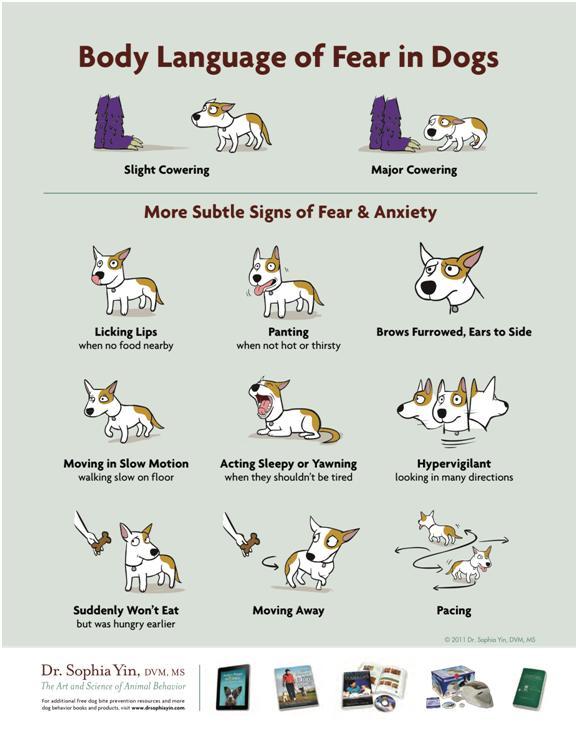
Behavioral cues that your pet is afraid, anxious, or stressed range from subtle to obvious. Subtle signs in dogs include salivation, panting, lip-licking, yawning, paw lifting, avoiding eye contact with a stressful situation/object/person, whites of their eyes are often more noticeable, sticking out the tongue, raised hairs on the back, increased activity, changing positions, and keeping a low body position. Obvious signs in dogs include rolling onto its back, hiding, trembling, vocalizing, urination, defecation, and diarrhea. Cats are often difficult for people to read. Signs in cats include flattened ears, hiding, sitting on all fours with their head held in a low position, eyes wide, pupils dilated, whiskers close to body, tail close to body, increased breathing rate, vocalization, trembling, urination, defecation, spraying, and diarrhea. (1)
What causes it and what can you do?
Anxiety can be phobic, situational, separation-induced, or general in nature. Long term stress and anxiety in your pet can have negative effects on their health and your bond (2). Do not be afraid to talk to your veterinarian about any behavioural concerns you may have. Addressing anxiety related or behavioural related issues requires multiple approaches. These approaches may include training, environmental changes, human behaviour changes, and medical management.
Training
Training steps you can take to manage anxiety include avoidance, desensitization, counter-conditioning, and response substitution. Avoidance involves not putting your pet in a situation they dislike. This method does not address the actual problem. It is impossible to avoid some anxiety producing situations, and there are steps that can be taken to increase your pet’s ability to cope in those situations.
Desensitization involves getting your pet accustomed to the anxiety-invoking situation. This involves starting your pet with a low level of exposure to anxiety-invoking situation and gradually increasing that exposure. For example, if your pet has a noise-phobia and fear of thunder, keep your pet in a safe positive environment and play a CD of thunder noise at a low level for a short period of time. Reward the dog during this time. Gradually, over time, and multiple sessions, the time of exposure and volume can be increased.
Counter-conditioning takes an event your pet perceives as negative and associates it with a positive outcome. For example if your pet becomes anxious at the veterinarian’s office. Try going more frequently. Walk into the office, give your pet a treat, then leave. Then progress to walking in and siting down in the waiting room and give your pet a treat. Gradually increase the amount of time in the waiting room. Frequency and repetition is more important than time spent during a given session. It is important that you do not overwhelm your pet in the process of desensitizing them to a scary stimulus.
Flooding is and old school practice that involves overwhelming your pet with a stressful situation until your pet is forced to ‘accept’ the situation. This is not only stressful for your pet, but can lead to learned helpfulness, aggression, and can be detrimental to your bond with your pet (3). Positive reinforcement works far better than negative reinforcement.
Products and medications
There are other changes that you can make to help ease anxiety. Pheromones such as Adaptil and Feliway can help create a sense of safety in a home. Pressure wraps such as Thundersirt ® and Anxiety Wrap® have been shown to help anxious dogs during stressful situations (4-7). Medical options for more intense anxieties or general anxieties include pharmacological treatments such as anti-depressants, sedatives, and anxiolytics. If a medical approach is indicated, your veterinarian can prescribe these medications. Medical management can be used short term or long term depending on what your veterinarian thinks your pet needs.
Why is recognizing your pet’s behavioral cues is important? Your relationship with your pet and family depend on it.
Often canine behavioural cues are misinterpreted or missed entirely by humans. Unfortunately, this can result in children, or owners, being bitten or scratched. Here are some scary statistics to stress how important it is to be aware of behavioural cues. In a given year there are around 4.5 million people in the United States bitten by dogs (8) (9). Most of these incidents involved children and were within the home of a known dog (8) (9). Bites to children often involve the face and neck, usually because this is the part of the body closest to the dog (8) (9). Accidents most often happen when there is limited or no adult supervision (8) (9).
So what does that mean for you? You need to be aware of behavioural cues your pet may be giving that they are uncomfortable and may escalate. Any pet can bite, especially if they are put into an uncomfortable position. If you have children in your home, it is important to teach them how to properly interact with animals and how to read behavioural cues. If they are too young to properly behave around animals, do not leave your child unattended with an animal.
Below is the ladder of aggression(10). Often warning signs are missed and some steps are skipped. We often train pets not to growl before biting. It is important not to mistake signs of fear as signs of ‘submission’. Often pets will show these signs to avoid conflict, but ultimately, if pushed, they will result to drastic measures. Learn to read these signs and help your pet and family members stay safe.
4. King C, Buffington L, Smith TJ, Grandin T. Journal of Veterinary Behavior: Clinical Applications and Research.9(5):215-21.
5. Cottam N, Dodman NH, Ha JC. The effectiveness of the Anxiety Wrap in the treatment of canine thunderstorm phobia: An open-label trial. Journal of Veterinary Behavior: Clinical Applications and Research.8(3):154-61.
6. Cottam N, Dodman NH. Comparison of the effectiveness of a purported anti-static cape (the Storm Defender®) vs. a placebo cape in the treatment of canine thunderstorm phobia as assessed by owners’ reports. Applied Animal Behaviour Science. 2009;119(1–2):78-84.
7. Van Tilburg N. A review of the efficacy and practicality of pharmacological therapycompared with non-medical alternatives in the management of canine separation anxiety. 2016.
9. Preventing Dog Bites. CDC. http://www.cdc.gov/features/dog-bite-prevention/ [Accessed 23 Jul. 2016] .
10. Thebluedog.org. Ladder of aggression - The Blue Dog. 2016.
Other images to possibly include:

 Heat stroke is a condition commonly seen at veterinary clinics in warm weather. My own dog, Ziggy, scared me on a hot day last summer, when we were at a dog park. He was so excited to play with the other dogs; he overexerted himself and developed heat stroke. Thankfully, I recognized the signs and was able to cool him down without any problems. I hope the following information can help prevent heat stroke in your own pet.




.jpg)
