Thursday, November 14, 2019

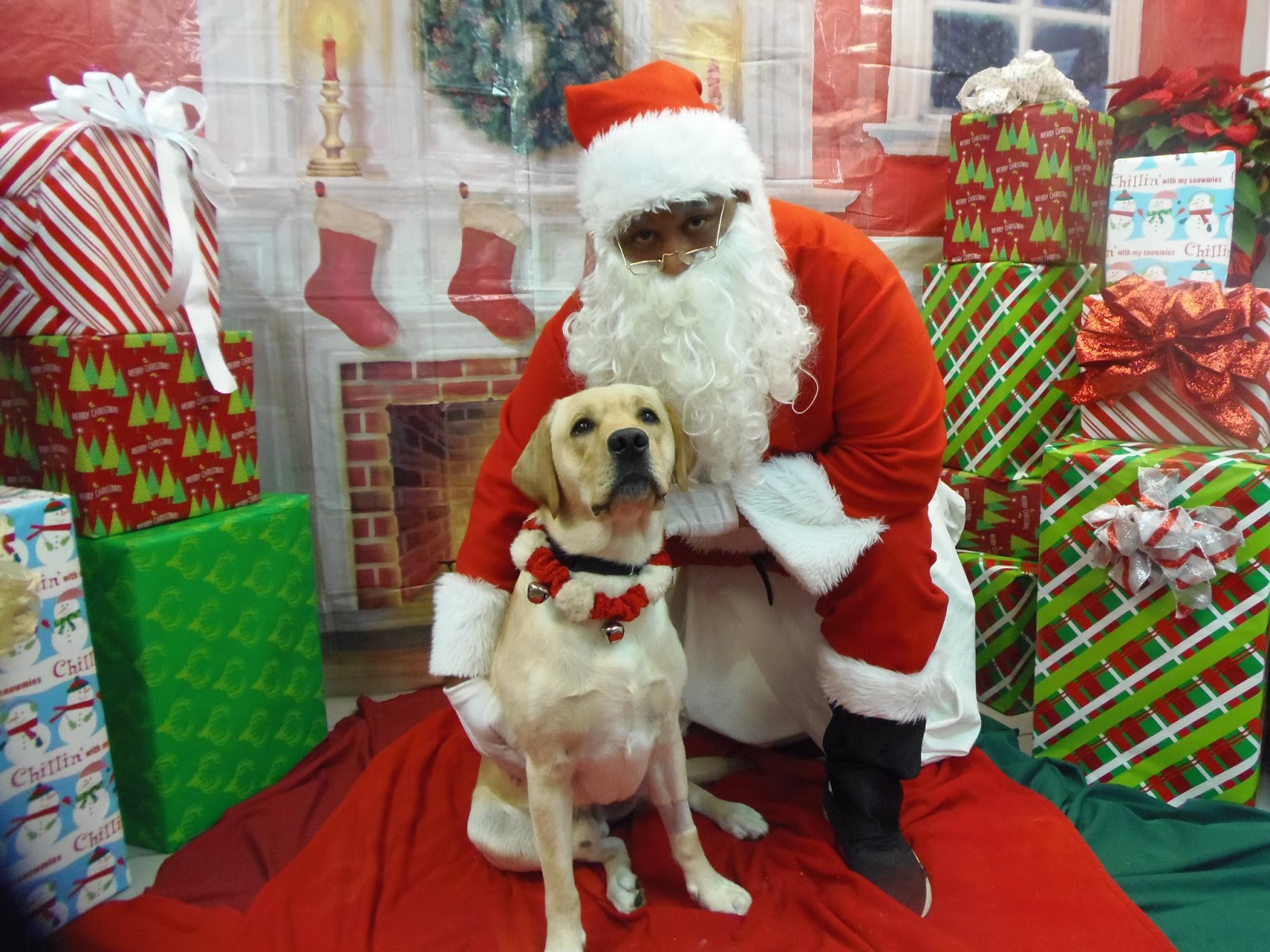
Free Pet Photo with Santa!

VCA Animal Hospital have a solid reputation for offering the very best in veterinary medicine as well as the latest technological advances and therapies. We believe that giving back to the people that supports us is paramount.

As part of our effort to give back, please join us for our FREE Pet Photo with Santa Event.
Now in its eighth year, St. Nick's pre-holiday route has VCA Hollywood as a permanent stop.
Maybe it is all of the cuddly faces!!

When: Saturday, December 14, 2019
9:00 a.m. - 12:00 p.m.

Where: VCA Hollywood -Annex
2864 Hollywood Blvd
Hollywood,33021

What: Bring your darling dog and your cherished cat to for a FREE pet photo with Santa!A photographer will be on hand to take photos and print them out while you wait.


December 14th is also the final day of our Pet Food Drive! You are invited to bring a donation of cat or dog food to be delivered to home-bound seniors in Broward County through the Meals on Wheels of So. Florida's Companion Pet Program. Meals on Wheels of So. Florida's Companion Pet Program was founded when volunteers began to notice clients sharing their meals with their pets. Senior on a restricted budget can have a difficult time meeting their own needs and often the needs of their companion animals can be neglected. With only the support of volunteers and donation this organization provides delivery of food for these loyal pets once a month to clients of Meals on Wheels. For more information visit: https://www.mowsoflo.org/meals-for-companion-pets

Join us in giving back to our community during this FREE holiday event!

Let us know your coming!

Friday, November 1, 2019

News You Can Use-Leptospirosis: a life threatening disease hiding in urine!


What is leptospirosis?
Leptospirosis is formally known as an anaerobic, gram-negative, spirochete bacteria, but more simplistically known as a bad micro-organism that can cause disease in essentially all mammals. Disease is not limited to our domesticated species, especially the dog, but can also be found in many different wild life species and is found throughout the world. The micro-organism particularly likes warm, moist climates and likes to live in stagnant water. As well, depending on where you are in the world, there are many different sub-types of leptospirosis that can all cause disease.

In our domestic animals, it is more commonly associated with disease in dogs than in cats. However, recent research shows that it may play a greater roll in cats than we suspected up to this point. In animals that carry leptospirosis, the pathogen is shed in the urine. In dogs, the most common route of infection is to come in contact either directly with infected urine, or vegetation, dirt, food or water contaminated with urine. The pathogen then penetrates through intact or cut skin, or directly through mucus membranes. Although it can sometimes cause chronic disease, most animals become acutely ill within 10 days.

Not only is leptospirosis a cause of illness in dogs and possibly cats, it can also infect humans! This is a zoonotic disease and special care should be taken with those animals where infection is suspected. Especially to avoid direct contact with the animal’s urine!


What should I look out for?
What does leptospirosis illness look like in your dog? Leptospirosis can affect many different body systems as it spreads through the body via the bloodstream. Depending on the degree of protection the dog has from its immune system, the severity of illness can differ. However, it is important to look out for signs including: fever, stiff muscles, weakness, vomiting, rapid dehydration, lethargy, drinking and peeing more than usual, a new cough or difficulty breathing. The disease is commonly associated with kidney disease, as the pathogen likes to live and reproduce in the kidneys.

Diagnosis
The diagnosis of leptospirosis can sometimes be a difficult one, as multiple tests are needed for a definitive diagnosis. Not only does it require that we see if the host body has developed antibodies to the pathogen, it is also important that we try to find the leptospirosis organism itself within bodily organs and tissues. Interpretation of the antibody tests can become difficult in older animals and those who have previously received the vaccine. Therefore, repeated tests are often necessary. To detect to organism in bodily tissues, highly skilled laboratory workers are needed, and even then there is question about the diagnostic quality.  

Treatment
Due to the difficulty diagnosing this infection, immediate treatment is necessary when it is suspected. If infected with acute clinical signs, the disease can be life threatening. Treatment is limited to supportive care and anti-biotic medications, including hydration therapy to help support the kidneys and other affected organs. The focus is to help prevent dehydration, to provide treatment for any other clinical signs such as anti-nausea and liver support medications and to start the patient on strong, effective antibiotics (doxycycline is most commonly used).
How can I prevent it?
As mentioned previously, there are different types of leptospirosis causing disease in different parts of the world. Right now, there is a vaccine against the subtypes Canicola, Icterohemorrhagiae, Grippotyphosa, and Pomona as these are most commonly associated with disease. The vaccine is proven to be quite efficacious at helping prevent clinical disease, reduce shedding in the urine, and help prevent invasion of the kidneys. Immunity can last up to 12 months, and so annual repetition of the vaccine is necessary for continued protection. However, it is important to keep in mind that dogs may still become infected with other subtypes even when vaccinated.


Furthermore, extra care can be taken to prevent unvaccinated dogs from being exposed in marshy/muddy areas, ponds, stagnant puddles and to wildlife in general.

Dr. Liske Bruinsma
https://vcahospitals.com/hollywood/primary/team/liske-bruinsma

Wednesday, October 2, 2019

Pet Food Drive- VCA Animal Hospital

Pet Food Drive- VCA Animal Hospital 


 VCA Hollywood Animal Hospital proudly supports Meals on Wheels South Florida, Meals for Companion Pets Program as they celebrate 20 years of providing pet food to homebound and disabled seniors in Broward County.  Supported 100% by donation, Meals on Wheels for Companion Pets delivers over 800 lbs of pet food to the southern portion of Broward County alone. VCA Hollywood Animal Hospital’s annual pet food drive deposits food into their food bank as well as provides monetary donations for replenishment throughout the year.

Now in its 8th year, VCA Hollywood Animal Hospital and the Meals for Companion Pets Program have enjoyed the partnership and the grass-roots fundraising efforts of our local businesses, corporate partners and our community to raise thousands of pounds of food during this drive.

How can you help? Donations of canned & dry food, for cats & dogs made to VCA Hollywood from Nov.9th- Dec. 14th, will be deposited into the Meals for Companion Pets food bank for monthly distribution to senior pet owners.  

When?  November 9th- December 14, 2019
7:30 a.m. - 7:00 p.m. Monday - Saturday

Where?
VCA Hollywood Animal Hospital
2864 Hollywood Boulevard,
Hollywood, Florida 33020

954.920.3556
(Drop off sites are located in both the main hospital and annex building)


HOW? Deliver donations of canned, dry or dehydrated food for cats or dogs to VCA Hollywood.  Then visit Meals on Wheels South Florida to learn more about their Meals for Companion Pets Program and how you can help further. https://www.bmow.org/programs/companionpetprogram/


“Our partnership with Meals on Wheels for Companion Pets was born out of a desire to give back to our community. Now 8 year later, Meals on Wheels has become a part of the identity of VCA Hollywood and it is a source of great pride for all of our staff and doctors who value first and foremost, the bond between human and pet.”
-Linda Ream, Communications Coordinator-VCA Hollywood


ADDITIONAL INFORMATION:
VCA Hollywood Animal Hospital has earned a solid reputation for offering the very best in veterinary medicine as well as the latest technological advances and therapies. Founded in 1947, serving S. Florida for over 70 years, we are committed to our community. We believe that giving back to the people that supports us is paramount. For more information, please visit www.vcahollywood.com or call 954.920.3556.

Meals on Wheels for Companion Pets (BMOW) Founded in 1999, the Meals for Companion Pets Program is a volunteer-driven effort providing pet food to homebound and disabled seniors in Broward County. Research shows that seniors with pets are less likely to exhibit depression, report feelings of loneliness and experience illness. But taking care of a pet – feeding, grooming and veterinary care – can be financially and physically burdensome to seniors. More often than not, a devoted animal lover with limited access to food will feed their hungry pet before they feed themselves. Pet food is provided through the generosity of local donors and grants and is delivered on the third Saturday of each month. Volunteers are always needed on the third Saturday of the month to pack & deliver food.

Over the last 8 years VCA Hollywood has delivered over 24,000 lbs of food and over $6500 to Meals on Wheels during this Pet Food Drive.


Tuesday, October 1, 2019

News You Can Use- Toad Toxicity: The frog you should never kiss!


The frog you should never kiss!

The Bufo toad (Bufo marinus) also known as marine toad, giant toad, or cane toad is commonly found in the south Florida area. These toads are brown to greyish-brown in color with black or white spots. They are often seen at dusk, dawn, and during the night. Bufo toads have glands on the back of their heads, called the parotid glands that secrete a whitish liquid. This secretion is highly toxic to dogs, cats and other animals. This toxin may also cause skin irritation in humans.

Dogs are commonly exposed by biting or licking the Bufo toad. Once exposed the toxin is rapidly absorbed through the mucous membranes (gums), eyes, open wounds, or gastrointestinal tract. The toxin reaches the bloodstream and targets the heart, blood vessels and nervous system.
   
Clinical signs you may see are brick-red mucous membranes (gums), foamy salivation, difficulty breathing, staggering and stumbling, vomiting, convulsions or seizures and irregular heartbeat. There is no antidote for Bufo toad poisoning so immediate treatment is critical.

Immediately rinse out your pet’s mouth with a soaking wet wash cloth several times to remove the toxin from the mouth. Please do not use a hose to rinse the mouth as water can accidentally be inhaled into the lungs leading to aspiration pneumonia, a potentially life –threatening condition. After rinsing your pet’s mouth, proceed to the nearest veterinary clinic or emergency clinic as the toxin acts quickly.  

In hospital treatment may consist of intravenous fluids and medications to counteract the seizure activity and cardiac abnormalities. Depending on the degree of symptoms your pet may have to be hospitalized for several days following exposure.

Possible prevention of Bufo toad poisoning includes walking your pet on a leash during times when toads are commonly seen. Bowls of pet food and water kept outside should be picked up at night as they have the potential to attract toads to the area. 


Dr. Amanda Causey
https://vcahospitals.com/hollywood/primary/team/amanda-causey

Friday, September 20, 2019

Retired K9 Officer Healthcare Fund

Caring for the officers that care for us!! #familymembers

VCA Hollywood Animal Hospital is proud to share our partnership with the Sheriff’s Foundation of Broward County Retired K9 Officers Healthcare Fund (RK9OHF) to raise money for the coverage of veterinary care costs to canine police officers that have worked to protect our S. Florida community. In retirement, canine officers often live out their years in comfort with their handlers, or partners. Yet, after a career of service these officers are prone to advance orthopedic and service related conditions in addition to issues associated with simply being a senior pet. Typically, there is no financial support for these officers after retirement.

It is the belief of the RK9OHF that the cost of healthcare should be supplemented. The Sheriff’s Foundation of Broward County could not agree more.  As a 501(c)(3) nonprofit organization that collects and manages donations to memorial/ healthcare funds, training programs, education programs and other local nonprofit organizations the Retried K9 Officer Healthcare Fund seemed a perfect extension of their mission. 

Under the supervision of the Sheriff’s Foundation of Broward County, the RK9OHF and VCA Hollywood Animal Hospital provide the best in wellness care to these officers and cover a portion of those costs.
With this partnership, retired K9 officers receive preventative care from VCA Hollywood Animal Hospital at a negotiated rate and the RK9OHF cover a portion of those fees. 

Please consider donating to the RK9OHF to support our South Florida K9 Police Officers in their retirement.  Donations can be made directly at VCA Hollywood Animal Hospital
Or by mail at
VCA Hollywood Animal Hospital
c/o Sheriff Foundation of Broward County
Retired K9 Officers Healthcare Fund
2864 Hollywood Blvd
Hollywood, Fl 33020

100% of all donations made to the Retired K9 Officer Healthcare Fund go to the cost of care for these K9 Officers.

For additional information about this fund please phone VCA Hollywood at 954-920-3556, email us at RK9OHF@gmail.com or reach out to the Sheriff Foundation of Broward County at http://sheriffsfoundationofbroward.org/


Retired K9 Officers Healthcare Fund is a 501(c)(3) serving under the supervision of the Sheriff's Foundation of Broward County- 85-8013389700C-0, tax ID# 65-0898338


Thursday, September 19, 2019

First we eat, then we do everything else!


 First we eat, then we do everything else! That is no more true then with our pets.
  
From puppies and kittens to our senior dogs and cats, preventative care is essential for pet health and well-being. Preventative care not only involves vaccinations, dental care, and regular check ups, it also involves proper nutrition for each life stage. Proper nutrition involves the proper diet for your pet’s species, breed, and age as well as supplements recommended from your primary care veterinarian.

As in humans, proper diet is important for overall health and wellness throughout your pet’s life. When your pet is a puppy or kitten the proper diet will help your pet reach its proper growth rate and weight into adulthood. Not to mention, as your pet ages it is more likely to develop arthritis and with a proper diet your pet will more likely be able to maintain it’s ideal body weight to decrease the stress on its joint as your pet enters into it’s senior life stage. Proper nutrition also means that pets should not be fed fatty human foods as this can lead to pets being overweight and certain diseases like pancreatitis. Furthermore, getting started on supplements (like glucosamine, type II collagen, and omega 3 fatty acids, etc.) earlier in life will help your pet maintain joint health as it ages.

As you can see nutrition plays a lot into your pet’s health, whether it be proper growth into adulthood, maintaining an ideal body weight, preventing certain diseases, and protecting joint health as your pet ages.

 The saying “you are what you eat” not only applies to us, it also applies to our pets.


Friday, May 10, 2019

Honoring Bobbi Arnold!!!

This May, our own Barbara “Bobbi” Arnold, was awarded induction into the ADRC Broward Senior Hall of Fame as one of 10 seniors in our community who were recognized for their dedication to volunteering in Broward County.

The ADRC recognizes Broward residents, age 60 and older, who have dedicated more than five years volunteering their precious time in the county. This year's honorees joined the ranks of the past 422 electees at the 36th Annual Dr. Nan S. Hutchison Broward Senior Hall of Fame Breakfast, which took place today, Friday, May 10, 2019.

Nominated for her 20 years of work with Meals on Wheels & Meals on Wheels for Companion Animals, Bobbi has brought care to hundreds of pets in So. Florida. At VCA Hollywood, we know firsthand the impact Bobbi has had on helping people. Not only, by the compassionate service she provides to our clients as Client Care Coordinator but by the simple existence of our relationship with Meals on Wheels for Pets. 

In 2012, to celebrate our 70th anniversary, Hollywood AH looked for ways to give back to our community. Bobbi, then a Hollywood AH client, introduced us to Meals on Wheels for Pets and our Pet Food Drive was born. Now 7 years later, our annual drive has grown to include local Veterinarians, VCA’s supply partners, local businesses and civic organizations to collect over 18,000 lbs of food and thousands of dollars to provide for these pets of homebound seniors in our county.

Bobbi’s impact on our community is profound and we are very proud and grateful for her.

Please join us in congratulating Bobbi.