Thursday, March 17, 2016

FREE Sight Saving Exams for the Pets That Serve!!!!!!


VCA HOLLYWOOD ANIMAL HOSPITAL TO OFFER FREE SIGHT SAVING EYE EXAMS FOR SERVICE ANIMALS ON SUNDAY MAY 22, 2016

VCA Hollywood Animal Hospital (VCA HAH) and Animal Eye Guys (AEG) of South Florida are proud to announce their participation in the ACVO National Service Dog Eye Exam program. Now in its 9th year, the program offers free eye exams for service and therapy animals during the month of May by more than 250 board certified veterinary ophthalmologists from around the United States (including Puerto Rico) and Canada.

Sunday, May 22th from 10a-4p, the VCA HAH will open its doors exclusively for these exams and host therapy animals from local individuals and community service organizations.

 Guardians and handlers of all qualified service animals are invited to visit the clinic on Sunday, May 15th for a free eye exam provided by Robert Swinger, D.V.M., Diplomate of the American College of Veterinary Ophthalmologist.  Dr. Swinger will be checking for problems including redness, squinting, cloudy corneas, retinal disease, early cataracts and other serious abnormalities.

“A lot of little things can be missed without all of the proper equipment. Early detection of problems and treatment is vital to the success of these working animals," said Dr. Swinger.

Noah, a Labrador Seeing Eye dog, was seen by Dr. Swinger during the 2015 Free Eye Event. Eighty-percent blind, Fernando Castillo, is retired and says the cost of veterinary care can strain his budget but his daily routine is intertwined with Noah's health.
"Only one of us can be blind," Castillo jokes!

HOW TO REGISTER FOR THE 2016 EVENT:
To qualify for a free exam, animals must be active working animals such as guide dogs, handicapped assistance animals, detection dogs, therapy animals and search and rescue animals that have been certified by a formal training program or organization or are currently enrolled in a formal training program. The certifying organization could be national, regional or local in nature. Owners/agents for the animal(s) must first register the animal via an online registration form beginning April 1st at www.ACVOeyeexam.org.  Registration ends April 30th. Once registered online, the owner/agent will receive a registration number. They can then simply call (954) 826-8871 to schedule an appointment for the month of May.

“Our practice has been serving the Hollywood community for over 68 years. We have a commitment to the pet community and we could not be happier to partner with Dr. Swinger and Animal Eye Guys once again to provide this service.”
Dr. James Herrington l VCAHAH l Medical Director

"It is truly an honor to provide exams for animals that so selflessly provide support to their people and communities."
Dr. Robert Swinger l Animal Eye Guys l Owner


About ACVO Free Eye Exams
 Since the program launched in 2008, nearly 45,000 Service Animals have received free screening eye exams, over 7,000 in 2015 alone. The event started when ACVO recognized the good  that was already being done by many members; the majority of whom were providing similar free exams across the country. By combining and expanding these individual events, ACVO was able to create more of an impact.
In addition to dogs, other service animals including a service donkey named Henry and our very own local HSBC’s miniature pony named, Lil’Man have received free sight saving exams. 

A sampling of groups served since the ACVO National Service Dog Eye Exam Event include: Transportation Security Agency (TSA) and military working dogs from Lackland Air Force Base in Texas; Puppies Behind Bars, an organization providing psychiatric service dogs to soldiers coming home from Iraq and Afghanistan; local fire, rescue and police agencies; and also individual service animal owners and handlers who rely on these amazing animals daily. 

The event is sponsored by ACVO® and Stokes Pharmacy, as well as several generous industry sponsors, and volunteer ophthalmologists. Participating ophthalmologists volunteer their services, staff and facilities at no charge to participate in the event.
Other non-profit supporters include the American Veterinary Medical Association, most state veterinary medical associations in the U.S. and Canada, the American Society of Veterinary Medical Association Executives, and other national service animal organizations.   Visit http://www.acvoeyeexam.org for more information.

About the American College of Veterinary Ophthalmologists®
The American College of Veterinary Ophthalmologists® (ACVO®) is an approved veterinary specialty organization of the American Board of Veterinary Specialties, and is recognized by the American Veterinary Medical Association. Its mission is “to advance the quality of veterinary medicine through certification of veterinarians who demonstrate excellence as specialists in veterinary ophthalmology.” To become board certified, a candidate must successfully complete a Doctor of Veterinary Medicine degree, a one-year internship, a three-year ACVO® approved residency and pass a series of credentials and examinations. For more information, please visit www.ACVO.org.

About Stokes Pharmacy
Stokes Pharmacy is a national, full-service compounding pharmacy specializing in the art and science of the custom formulation of prescription medicines for humans and animals. Leading the way in innovation, Stokes invites veterinarians to prescribe compounded medications online securely, quickly, and accurately via iFill, a cloud-based prescription management system. For more information, visit stokesrx.com.

 About the American College of Veterinary Ophthalmologists
The American College of Veterinary Ophthalmologists® is an approved veterinary specialty organization of the American Board of Veterinary Specialties, and is recognized by the American Veterinary Medical Association.  Its mission is “to advance the quality of veterinary medicine through certification of veterinarians who demonstrate excellence as specialists in veterinary ophthalmology.” To become board certified, a candidate must complete a Doctor of Veterinary Medicine degree, a one year internship, a three year approved residency and pass a series of credentials and examinations. For more information, please visit www.ACVO.org.


Tuesday, March 1, 2016

Easter Pet Poisons

The veterinarians at Pet Poison Helpline receive hundreds of calls this time of year from pet owners and veterinarians concerning cats that have ingested Easter lilies.
“Unbeknownst to many pet owners, Easter lilies are highly toxic to cats,” said Ahna Brutlag, DVM, MS assistant director at Pet Poison Helpline. “All parts of the Easter lily plant are poisonous – the petals, the leaves, the stem and even the pollen. Cats that ingest as few as one or two leaves, or even a small amount of pollen while grooming their fur, can suffer severe kidney failure.”
In most situations, symptoms of poisoning will develop within six to 12 hours of exposure. Early signs include vomiting, loss of appetite, lethargy and dehydration. Symptoms worsen as kidney failure develops. Some cats will experience disorientation, staggering and seizures.
“There is no effective antidote to counteract lily poisoning, so the sooner you can get your cat to the veterinarian, the better his chances of survival will be,” said Brutlag. “If you see your cat licking or eating any part of an Easter lily, call your veterinarian or Pet Poison Helpline immediately. If left untreated, his chances of survival are low.”
Treatment includes inducing vomiting, administering drugs like activated charcoal (to bind the poison in the stomach and intestines), intravenous fluid therapy to flush out the kidneys, and monitoring of kidney function through blood testing. The prognosis and the cost – both financially and physically – to the pet owner and cat, are best when treated immediately.
There are several other types of lilies that are toxic to cats as well. They are of the Lilium and Hemerocallis species and commonly referred to as Tiger lilies, Day lilies and Asiatic lilies. Popular in many gardens and yards, they can also result in severe acute kidney failure. These lilies are commonly found in florist bouquets, so it is imperative to check for poisonous flowers before bringing bouquets into the household. Other types of lilies – such as the Peace, Peruvian and Calla lilies – are usually not a problem for cats and may cause only minor drooling.
Thankfully, lily poisoning does not occur in dogs or people. However, if a large amount is ingested, it can result in mild gastrointestinal issues such as vomiting and diarrhea.

Other Dangers to Pets at Easter Time

Pet Poison Helpline also receives calls concerning pets that have ingested Easter grass and chocolate.
Usually green or yellow in color, Easter grass is the fake grass that often accompanies Easter baskets. When your cat or dog ingests something “stringy” like Easter grass, it can become anchored around the base of the tongue or stomach, rendering it unable to pass through the intestines. It can result in a linear foreign body and cause severe damage to the intestinal tract, often requiring expensive abdominal surgery.
Lastly, during the week of Easter, calls to Pet Poison Helpline concerning dogs that have been poisoned by chocolate increase by nearly 200 percent. While the occasional chocolate chip in one cookie may not be an issue, certain types of chocolate are very toxic to dogs. In general, the darker and more bitter the chocolate, the greater the danger. Baker’s chocolate and dark chocolate pose the biggest problem. The chemical toxicity is due to methylxanthines (a relative of caffeine) and results in vomiting, diarrhea, hyperactivity, an abnormal heart rhythm, seizures, and possibly death. Other sources include chewable chocolate flavored multi-vitamins, baked goods, or chocolate-covered espresso beans. If you suspect that your dog ate chocolate, call your veterinarian or Pet Poison Helpline immediately.
Spring is in the air and Easter is a wonderful holiday. Remember that your pets will be curious about new items you bring into your household like Easter lilies, Easter grass and chocolate. Keep them a safe distance away from your pets’ reach and enjoy the holiday and the season.


Thursday, February 25, 2016

Importance of Pet Oral Health


Good oral health is an important part of good general health for your pet.

Signs of oral and dental diseases in dogs and cats:

 - Bad breath.

 - Loose teeth or teeth that are discolored or covered in tartar.

 - Your pet shies away from you when you touch the mouth area.

 - Drooling or dropping food from the mouth.

 - Bleeding from the mouth. 

- Loss of appetite or loss of weight (this combination can result from diseases of many organs, and early veterinary examination is important).


It's also important to know that there are multiple stages of pet periodontal disease and without proper veterinary dental exam, cleaning and radiographs, there is no way to know if your pet’s oral health is at risk.

VCA Hollywood Animal Hospital has extended their dental special through March 31st! All dental cleanings at 20% off, PLUS free dental products with your purchase! Book your pet's cleaning today (954) 920-3556. 


SOURCE: http://www.avdc.org/ownersinfo.html http://avdc.org/AFD/five-stages-of-pet-periodontal-disease/

Tuesday, February 23, 2016

February Patient of the Month- Kaya!!!

This month’s Patient of the Month highlights a common tale of a pet that ate the wrong thing! However, this time with potentially devastating consequences unrelated to the more common issue of obstruction. 

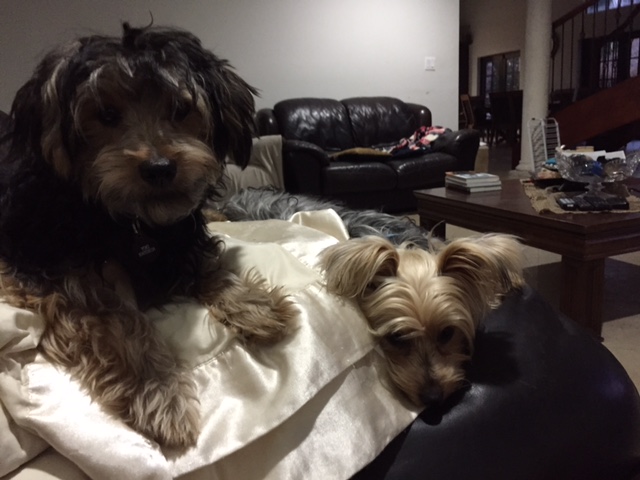
Kaya, a 10 month old Yorkie ate a penny. 

When little Kaya began showing signs of lethargy and inappetence her parents immediately brought her in for a check-up. Dr. Cappe was her Vet and after a thorough exam and complete history, Dr. Cappe immediately suspected anemia and that a foreign body was present. 

She ordered radiographs and lab work to include a complete blood count. The complete blood count would confirm the anemia and the radiographs would hopefully rule out a foreign body. Well half of that was true!

The diagnostics confirmed a foreign body as well as anemia due to high levels of zinc-related destruction of Red Blood Cells (RBCs). Due to rapid destruction of red blood cells, Dr. Cappe evaluated Kaya's packed cell volume (PCV) to calculate the number of viable red blood cells Kaya still had left. That number was low and Kaya need a blood transfusion.  

While a life saving transfusion was critical, the issue of her foreign body was ever present. Radiographs showed a clear object in her stomach that was easily identified as a coin. Zinc toxicity was the most likely diagnosis.

While zinc is one of the most important minerals in the maintenance of a healthy body in both pets and humans, too much zinc can cause serious health problems. Once a penny starts to corrode, the zinc is released into the bloodstream and causes anemia and liver damage.  It could take a few hours to a couple days before signs of toxicity start to show up but the damage begins immediately. 
Luckily pennies are just heavy enough that they tend to stay in the stomach so a non-invasive procedure with a scope was immediately performed by Dr. Cappe to pluck the penny right out. 


Once the penny was removed Kaya received her blood transfusion to correct the anemia and was maintained on IV fluids to flush the liver and help rid her body of the zinc. Supportive care was needed to comfort her upset stomach and ease her nausea.With days Kaya was on the mend.


This month we are please to share that Kaya is home with her brother Yoki and back to being simply the sweetest yorkie in town! Her pet parents credit Dr. Cappe’s expertise, professionalism and overall sweet disposition for not only saving their little girls life but helping them get through this tenuous time. 

As always we love to be able to share the stories of our patients and are happy to recognize Kaya as our February Patient of the Month!!  


Monday, February 22, 2016

February Team Member of the Month- Samantha!!

This month we recognize a team member that shows her commitment to the VCA HAH through her sincere dedication to the care of animals.

Samantha J. joined our team officially in June of last year but was a regular volunteer for many months prior. Coming to us by way of the Humane Society of Broward County-were she still volunteers- she stands out in her role as a part time HAH Vet Assistant.

Always bustling around helping clients and -frankly, anyone that asks- she is depended on greatly by each department. She is forever with a smile and always able to stay above any work place drama!

Her attention to details is appreciated here and we are confident it will help her in her academic pursuit to be a  Zoo Veterinarian. Samantha is someone we believe will continue to make a large impact on the animal world for years to come and it is our pleasure to recognize  her as our February Team Member of the Month!! 


-

Friday, January 29, 2016

January Team Member of the Month-Alexis!!!


It takes every department in this practice, working together, to make our hospital a success. However, it is arguable that the Front Office Staff has the yeoman's job of serving our clients and our staff from start to finish for every client, every day. There is certainly few dull moments up there.

However, our January Team Member of the Month makes these tasks move seamlessly. Coming up on 9 years with our family, Alexis has seen us through the good and the not so good days.

She is known for her quiet disposition and vocal pup but most importantly for her commitment to getting things done.

If ever you need something, you can bet on Alexis to come through for you. She simply does her job without muss or fuss and brings a quality of calmness to everyone.

This month we would like to thank her for all she does to keep our ducks in a row and our staff and client happy. She is truly a star team player!


Thursday, January 28, 2016

VCA HAH Welcomes Veterinary Cardiologist!!!!


Dewey H Carpenter Jr. DVM, DACVIM – Cardiology

VCA Hollywood Animal Hospital would like to welcome Dewey Carpenter, DVM, ACVIM (Cardiology) to our practice.

Dr. Carpenter grew up in Greenville S.C and served 6 years in the U.S. Navy. Following his honorable discharge from the Navy he completed a Bachelors of Science in Biology and Chemistry at Charleston Southern University in 1996. He then received his DVM from Mississippi State University in 2000, completed an Internship in small animal medicine and surgery at Auburn University in 2001 and finished  a residency in Comparative Cardiology at the University of Minnesota in 2004. He became boarded in cardiology through the ACVIM in 2005 and began private practice in Cary, North Carolina. In 2012 he moved to Florida and practiced as the sole Cardiologist at a local hospital.

Dr.  Carpenter’s joins our team to pursue his effort of expanding the availability of specialized cardiology to all of Florida. His mission is to offer excellent and compassionate care to all his patients.

Dr. Carpenter has been married for 26 years, has three children, as well as three cats, and a dog. He currently lives in Coral Springs, Florida. In his off time, he enjoys family activities, coaching his daughter’s rec soccer team as well as training in Northern Seven Star Praying Mantis Kung Fu.


Board Certified: The American College of Veterinary Internal Medicine in Cardiology: 2005

Residency: University of Minnesota College of Veterinary Medicine: 2001-2004

Internship: Auburn University: 2000-2001

DVM: from Mississippi State University: 2000